Previously: Rose protected the old record book from light and damp air instead of keeping it open. Her next lead was the Editorial Room’s supply ledger, which could be read without touching the record book.
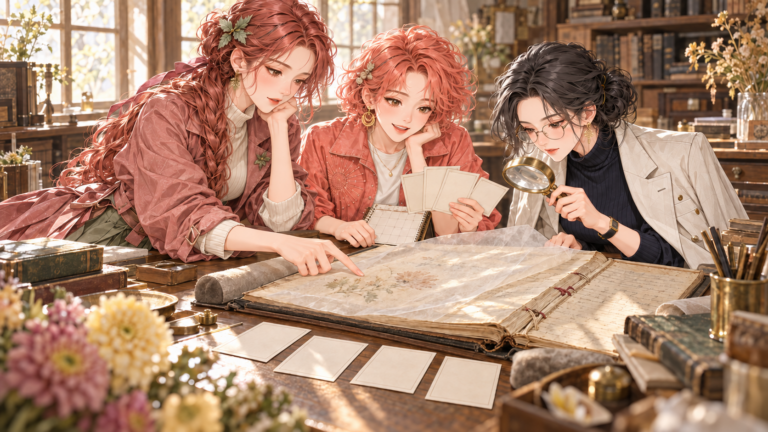
At 5:52 in the morning, seven rows of colored tabs covered the worktable in the Flower Calendar Editorial Room.
“Is that a before-breakfast amount of information?” Gerbera asked.
Carnation looked up from the old supply ledger. Her hair was tied back, her cuffs folded to equal widths, and both pencils had been sharpened to the same length.
“Numbers are quieter before the phones begin ringing.”
“I didn’t know numbers had quiet hours.”
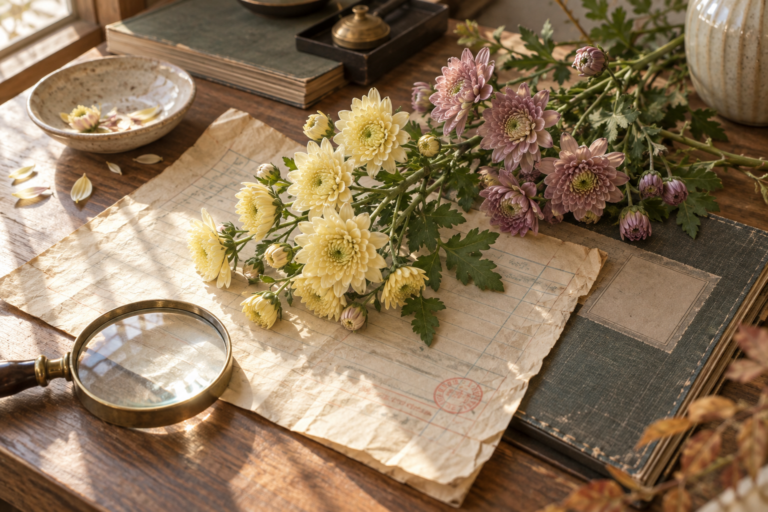
A close photograph of the binding thread in the record book lay at the center of the desk. The previous day, Rose had decided not to touch it. They would begin with purchase dates and suppliers in the supply ledger.
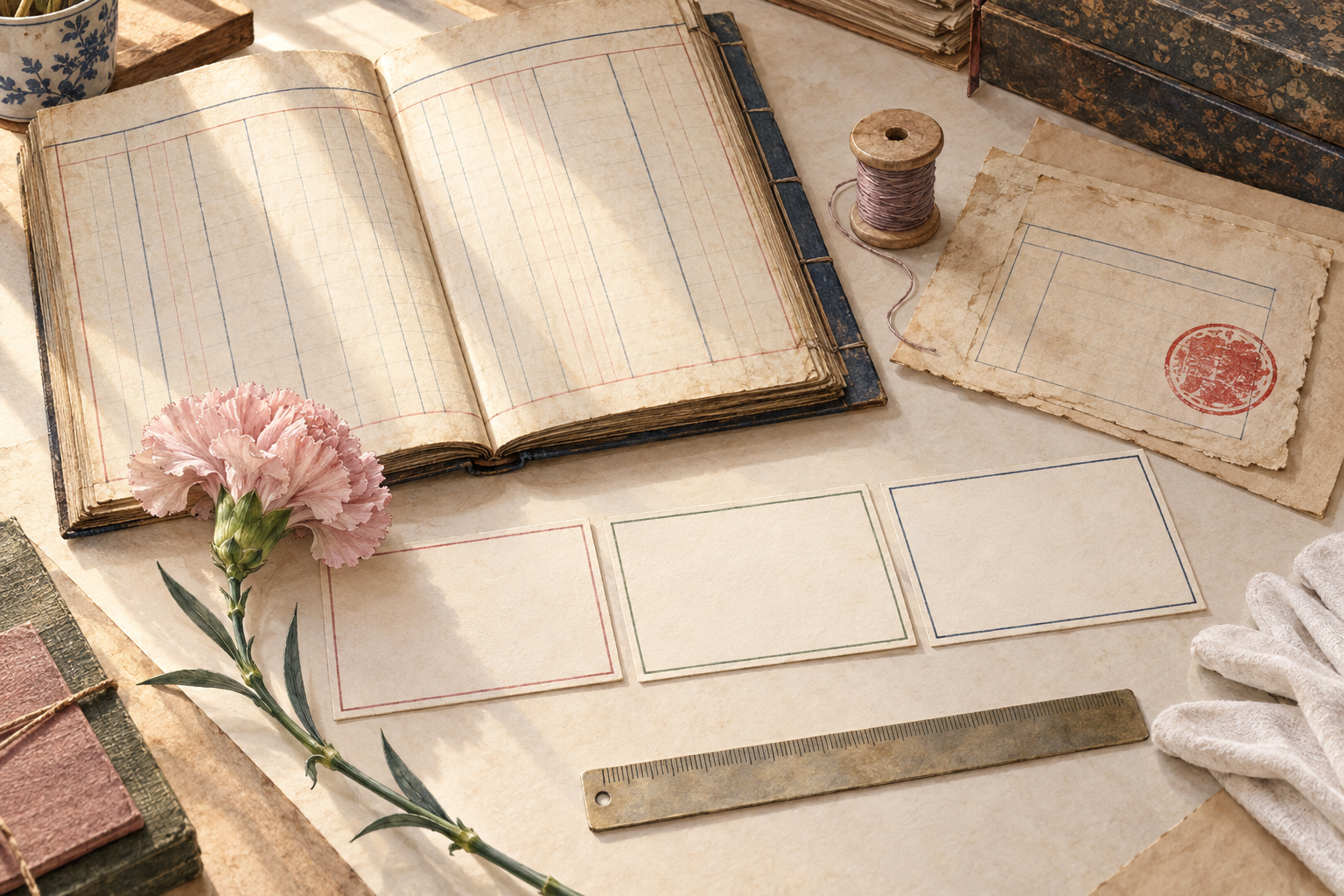
Carnation divided the ledger into three columns.
Ordered.
Received into stock.
Delivered.
“The numbers may look alike,” she said, “but they describe different work.”
Rose glanced at the old order slip. “The paid mark tells us that an order and payment existed.”
“The delivery field is blank. It does not prove that anything arrived.”
Carnation opened the Japanese Ministry of Agriculture, Forestry and Fisheries overview of its wholesale flower-market survey. It describes a wholesale flower market as a place where flowers received on consignment or purchased from producers and shippers are sold to intermediaries and retail buyers through auction, tender, or negotiated sale. Wholesale quantities for cut flowers are counted by the stem.
“Market numbers can help us trace when something was traded, what it was, and how many stems moved,” Carnation said. “They do not say who received this individual retail order.”
Gerbera counted the arrows in Carnation’s distribution diagram. “There are nine.”
“I do not want to erase a possible route.”
“At this rate, the paper will become a bouquet.”
Kiku pointed to the arrow at the far right. In faint pencil, its destination read person who repaired the record book.
“Can you draw that arrow from the supply ledger alone?” she asked.
Carnation’s pencil stopped.
The supply ledger contained a purchase of bookbinding materials that included thread. Part of the date had faded, but the surrounding pages narrowed the purchase to later in the same Japanese fiscal year (April–March) as the order slip. One abbreviation remained in the supplier field. Nothing identified the person who used the thread.
“I extended that line too far.”
Carnation erased the arrow leading to person who repaired the record book. Outside the diagram, she wrote a smaller note.
Purchase recorded. User unconfirmed.
Rose did not assign the next task. She asked, “What do you want to check next?”
Carnation circled the supplier abbreviation with one finger.
“Before we infer a destination, I want to establish which shop this mark referred to. The route should stop where the evidence stops.”
Rose did not interrupt. She waited while Carnation placed a clean white card beside the ledger.
They had established one thing that morning. A purchase of bookbinding materials, including thread, was recorded later in the same Japanese fiscal year as the order slip. Whether the record book’s thread came from that purchase had not yet been checked. There was also no basis for treating the purchaser, the person who repaired the record book, and the flower customer as one person.
Carnation folded seven rows of tabs into three. Gerbera leaned closer.
“Did you remove any?”
“I stacked them.”
“That was yesterday’s solution too.”
By the time the window brightened, only the supplier abbreviation remained on the white card.
The flower fact in this episode
The Japanese Ministry of Agriculture, Forestry and Fisheries explains that wholesale quantities for cut flowers sold through auction, tender, or negotiated transactions are counted by the stem in its wholesale flower-market survey. These statistics can help trace distribution, but they do not identify the recipient of an individual retail delivery. This episode keeps the role of the real statistics separate from the fictional order slip and supply ledger.
A useful sentence for a florist or archive
“Of ordering, receiving stock, and delivery, how far does this record allow us to confirm? Please leave the rest blank rather than inferring it.”
One question for the next episode
Which shop did the abbreviation that appears only once in that month’s supplier list refer to?