Previously: Rose, Gerbera, and Kiku divided the nameless flower trace into four questions and chose their own entrances to the investigation. At the end of the day, Gerbera found one repaired stitch made with thread of a different color and thickness.
On Sunday, the clock sounded closer than the cars outside the Flower Calendar Editorial Room.
Rose opened a window and closed it again almost at once. Damp air left by the night’s rain moved toward the boxes of old paper.
The four fields from the previous day remained on the desk: name, place, date, and the person who placed the flower in the ledger. Every field was still blank.
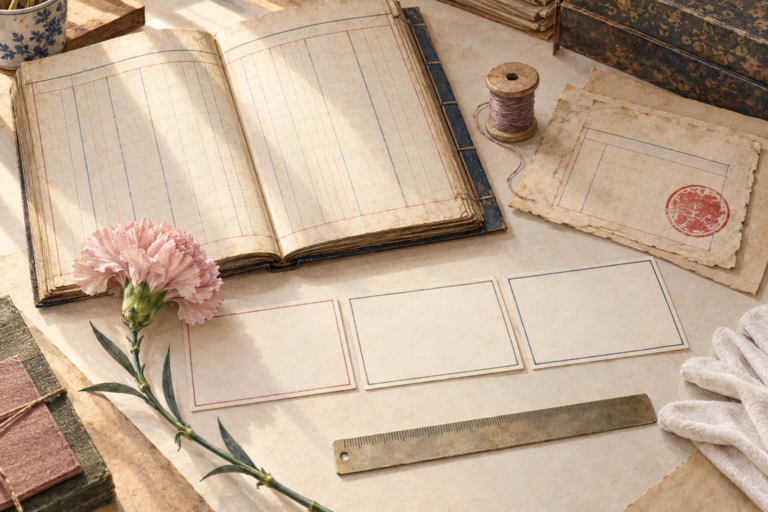
In a close photograph of the repaired stitch, the fiber direction differed from the rest. Lifting the thread might reveal color or paper damage hidden beneath it.
Rose’s hand reached the edge of the protective sheet. “If I touch it, I might know right away.”
Instead of an answer, she saw Kiku’s six-field card and Gerbera’s words: all four fields on hold. They could not reduce the evidence that remained simply to reach an answer sooner.
Rose did not lift the thread. She placed a ruler beside it and took one wide photograph and one close view. She diagrammed only the positions of thread, paper, and flower trace, recording that none had been touched. Then she closed the ledger.
An educational guide on seaweed specimens from Japan’s National Museum of Nature and Science says completed specimens should be placed in covers and stored in the dark. Because they are vulnerable to humidity, it describes a specimen cabinet in a dehumidified room as ideal. The ledger was not a scientific specimen. Even so, there was reason to keep an old plant trace away from light and damp air.
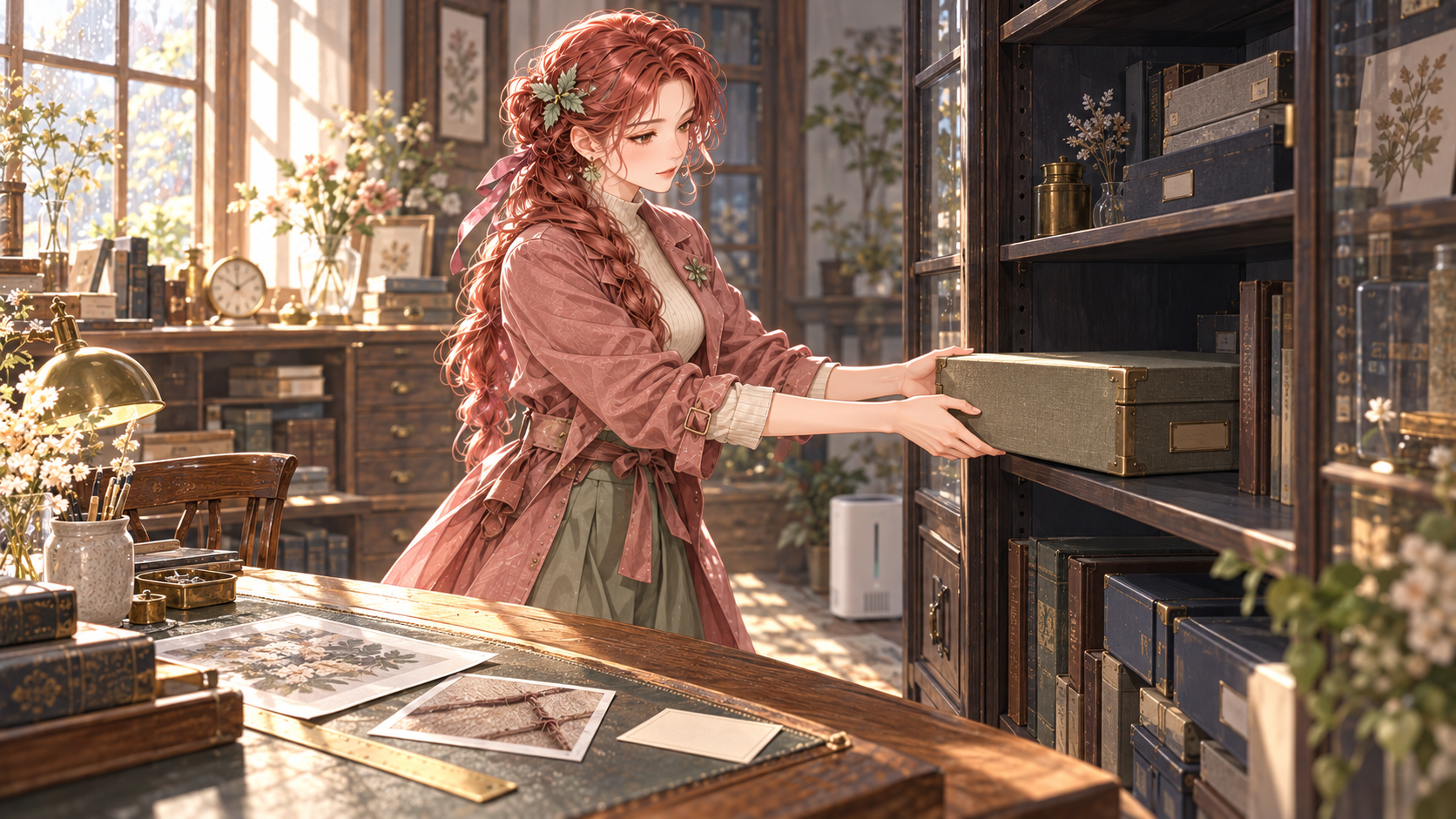
Rose began to put the ledger into a new box and stopped. The old box retained the arrangement left by the previous editor. Even a well-intended transfer could remove information.
Sunlight reached the edge of the desk.
Rose returned the ledger to its original orientation and moved the whole old box to a middle shelf beyond the light. She recorded the dehumidifier reading and room temperature, then attached a card outside.
The investigation is not closed. Today, the object remains closed so it can be protected.
She sent Kiku and Gerbera a photograph with one note: Stored without touching. Neither replied at once. It was Sunday.
While she waited, Rose chose one record that could be checked without touching the ledger: the Editorial Room’s old supply ledger.
Beside the close photograph of the thread, she wrote: Binding thread: check purchase date, supplier, and repair record, in that order.
The day’s small problem was resolved. The team could move toward the next lead without leaving the old ledger open. Light crossed the desk again, but it did not reach the protected box.
The flower fact in this episode
Educational material on pressed seaweed specimens from Japan’s National Museum of Nature and Science says completed specimens should be placed in covers and stored in the dark, ideally where humidity can be controlled. The ledger is not a research specimen, so the episode does not claim that the same treatment is optimal. It shows only the smaller decision not to touch the trace and to move it away from light and damp air.
A useful sentence for a florist or archive
“I will not open it today. I will record its present condition and storage location, then begin with sources that can be checked without touching the object.”
One question for the next episode
Does the Editorial Room’s old supply ledger record when this binding thread was purchased?