Previously: A visitor choosing one stem for her grandmother’s memorial selected a pale-yellow spray chrysanthemum herself. After closing, Rose, Gerbera, and Kiku found a flattened flower trace that did not appear in the shop’s handling records.
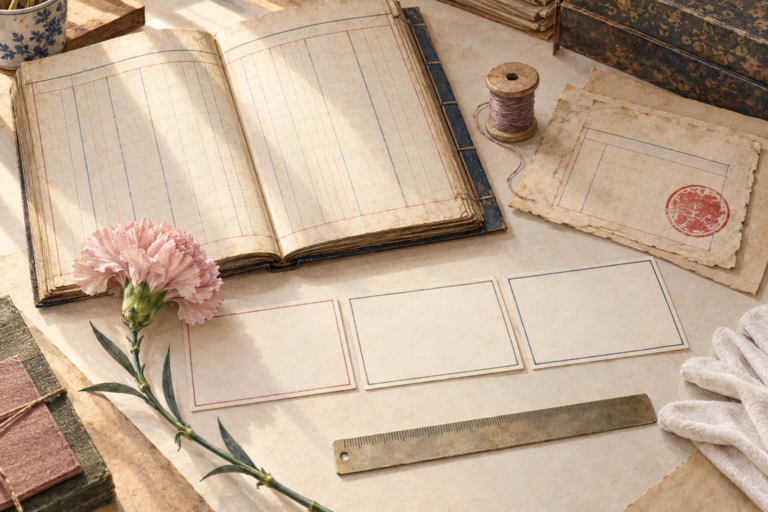
On Saturday, Kiku ruled twelve lines across a small card in the Flower Calendar Editorial Room.
Gerbera watched for thirty seconds and spoke before Kiku could draw a thirteenth. “Isn’t the card going to be larger than the flower trace?”
“They are necessary,” Kiku said. “All twelve?” “There were twenty-four when I began.” “Half of too many is still too many.”
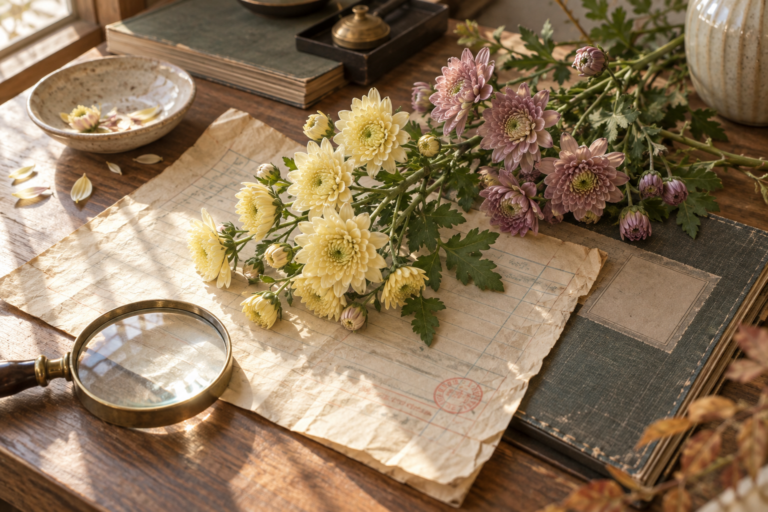
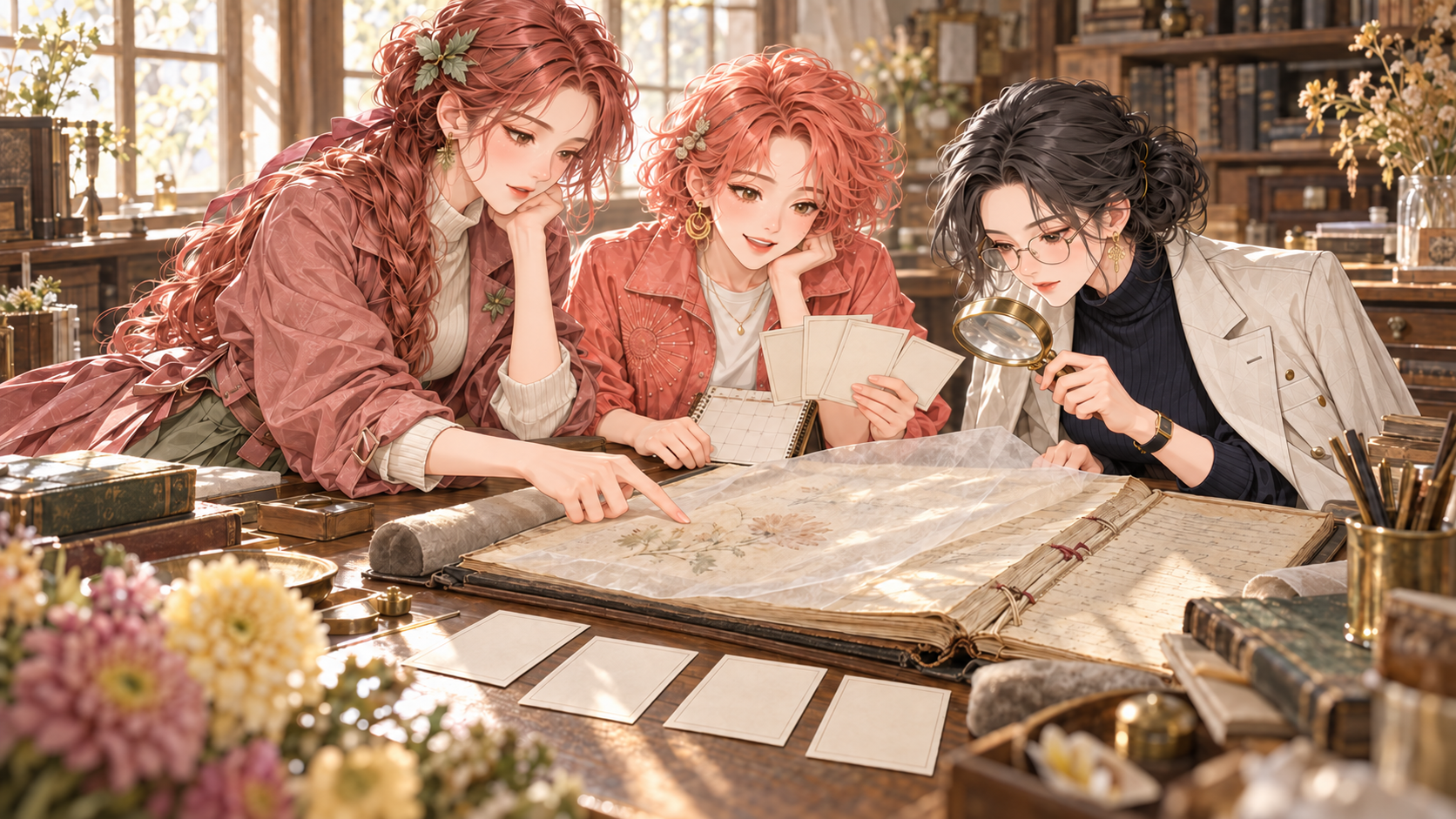
The old ledger lay beneath a transparent protective sheet. Near its binding was a flattened flower trace that had lost almost all its color. Rose thought of several possible names and dismissed them. They would not begin with a name. Today they needed to turn Kiku’s earlier decision not to guess into a method.
Gerbera found a public specimen-label guide from Japan’s National Museum of Nature and Science. The educational guide concerns pressed seaweed specimens and lists four essential label elements: specimen name, collection site, collection date, and collector.
“A scientific specimen and this trace are not the same thing,” Kiku said.
“It isn’t the same thing, but those fields could still help us investigate,” Rose replied.
They made four fields. None could yet be completed. Name: unknown. Place: unknown. Date: unknown. Person: unknown.
“Four blank fields,” Gerbera sighed. Kiku shook her head. “A blank is not a failure. Recording what we don’t know is still part of the record.” “Then all four are on hold.” “Yes. That is accurate.”
Rose looked at the blank card. Until recently, she would have assigned the order, investigator, and deadline before anyone else spoke. Today she asked, “Where do you want to begin?”
Gerbera chose the date: narrowing when the page was used would be better than searching forever for a similar shape. Kiku chose the person who placed it in the ledger: handwriting and paper use could be compared even if the flower stayed unnamed.
“I want to trace where this mark was pressed into the binding,” Rose said. “First I’ll restore the page order and see where it belongs.”
It was not an assignment. Each had chosen one entrance. They would leave the name field open until the shape, period, and person were better documented.
Kiku cut the twelve-field card in half and used the reverse. “Twelve down to four. Bold,” Gerbera said. “Six,” Kiku replied. “There are two fields on the back.”
The day’s small problem was settled. They had not identified the flower; they had made three self-chosen lines of inquiry into a record another person could follow.
As they placed the card beside the ledger, Gerbera pointed to one spot in the binding. A thread of different color and thickness had been used for a single stitch. “This spot was repaired once. The thread is a different color and thickness.”
Without touching the thread, Kiku drew a small circle beside the date field.
The flower fact in this episode
An educational guide from Japan’s National Museum of Nature and Science lists a specimen name, collection location, collection date, and collector as essential information for a pressed seaweed specimen. The fictional flower trace is not a research specimen. The team borrows only the underlying question: what must be recorded so another person can follow the same object?
A useful sentence for a florist or archive
“Before deciding on the flower’s name, I would like to check separately when, where, and by whom this record was made.”
One question for the next episode
Can a single repair in the binding narrow down when someone opened this page?