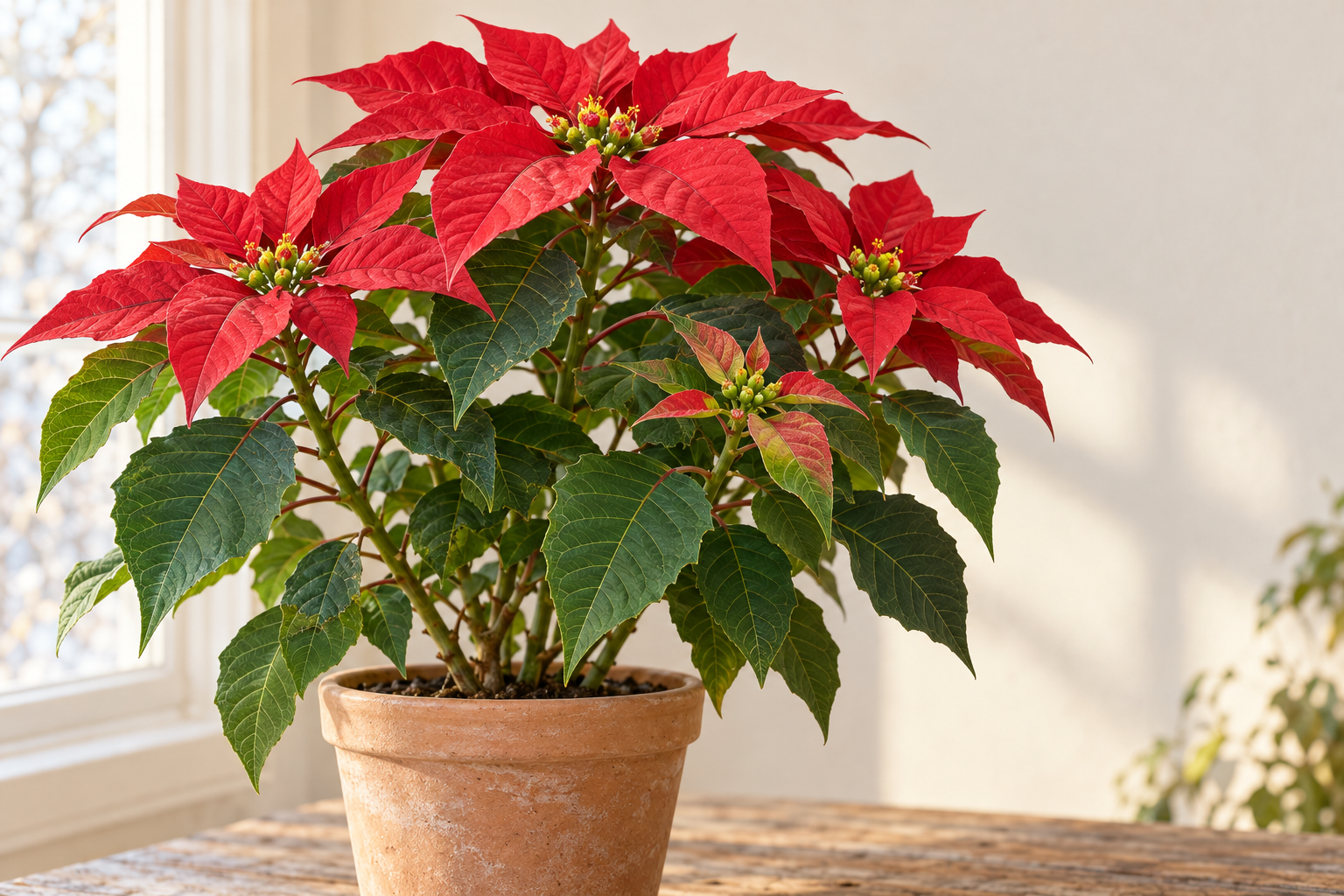
Poinsettia is a member of the spurge family native from Mexico to Guatemala. The red, pink, or pale structures that resemble petals are modified leaves called bracts. The true flowers are the small yellow-green structures at their center.
How the color develops
Shortening days help initiate bract coloration. A plant kept for another year needs an autumn period protected from artificial light at night. Commercial plants are often treated with growth regulators to keep them compact, so a plant grown on at home may become taller.
Winter indoor care
The Royal Horticultural Society recommends a bright, warm indoor position away from cold draughts. Water when the compost surface begins to dry, then let excess water drain. Exposure to a cold pavement display or winter journey can cause leaves and bracts to drop. Ask for protective wrapping and keep the plant away from both cold windows and direct heating airflow at home.
Avoid the milky sap
Broken leaves and stems release milky sap. The RHS advises avoiding ingestion and contact because the sap may irritate skin and eyes. Wear gloves for pruning or propagation, avoid touching the face, and wash hands and tools afterward.
Pet safety
The ASPCA says the irritant sap can affect the mouth and stomach of dogs, cats, and horses and may sometimes cause vomiting, while also noting that poinsettia toxicity is generally overrated. Do not reduce this to either “deadly” or “completely safe.” Keep it out of reach and contact a veterinarian if ingestion or symptoms are suspected.
Giving a poinsettia
Check whether the recipient has a warm position away from a cold entrance or window and whether children or pets can be kept from chewing it. Explain that the colorful structures are bracts, and let the recipient decide whether to enjoy it as a seasonal plant or try growing it on.