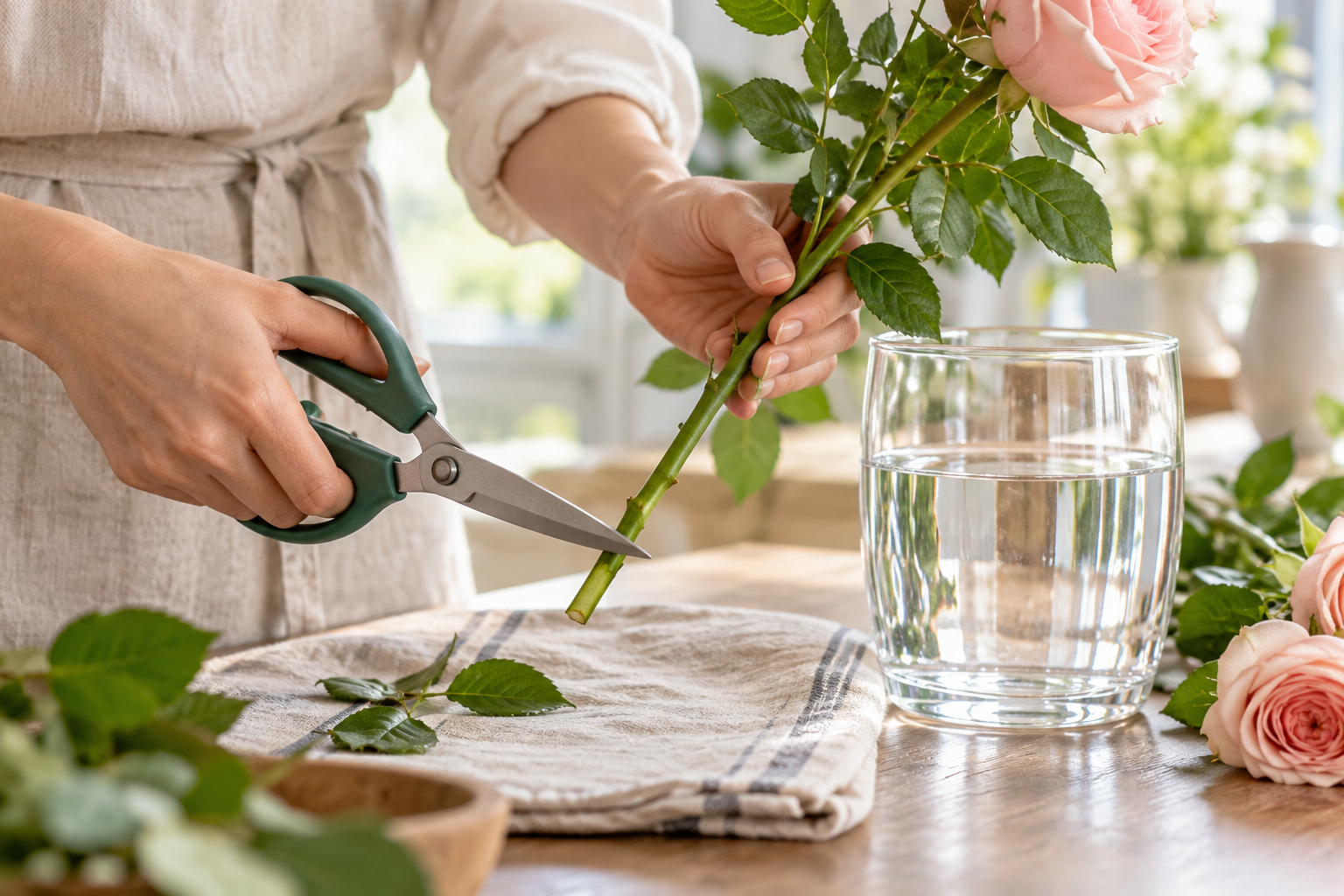
An editorial image illustrating the use of a clean, sharp tool. It does not depict a real person or shop.
For recutting, tool condition matters as much as the direction of the cut. A MAFF regional guide explains that dull scissors can crush a stem and make water uptake more difficult.
Clean the blades first
Wash away sap and dirt, rinse thoroughly, and dry the tool. Do not force ordinary craft scissors through thick stems; choose a gardening tool suited to the diameter.
Choose a healthy point for one clean cut
Cut just above a damaged end rather than squeezing the same place repeatedly. Firm and soft stems have different example cuts, so also follow flower-specific advice.
Cut away from hands and body
Stabilize the stem and keep fingers out of the blade path. Do not force thick, woody, or thorny stems when the right tool is unavailable.
Wash and dry the tool after use
Clean storage prepares the scissors for the next water change. Stop using a tool that is rusty, loose, or damaged.
Related: diagonal and straight stem cuts
Sources: MAFF; MAFF Kanto; MAFF Chugoku-Shikoku