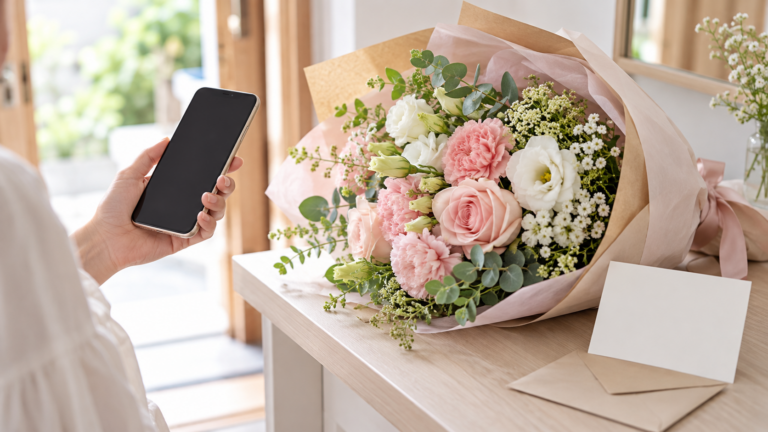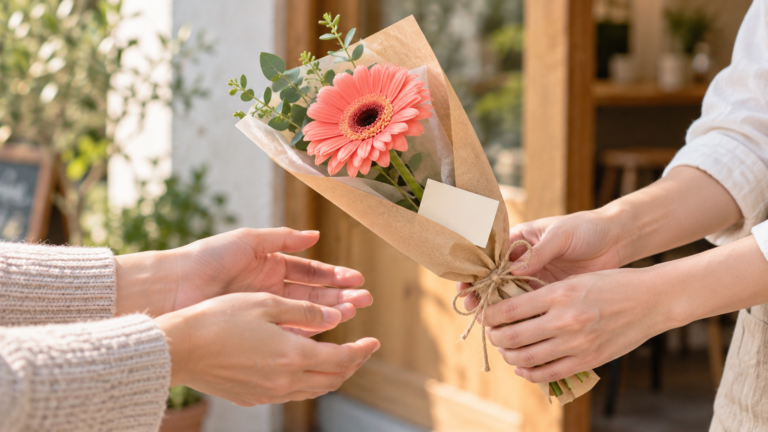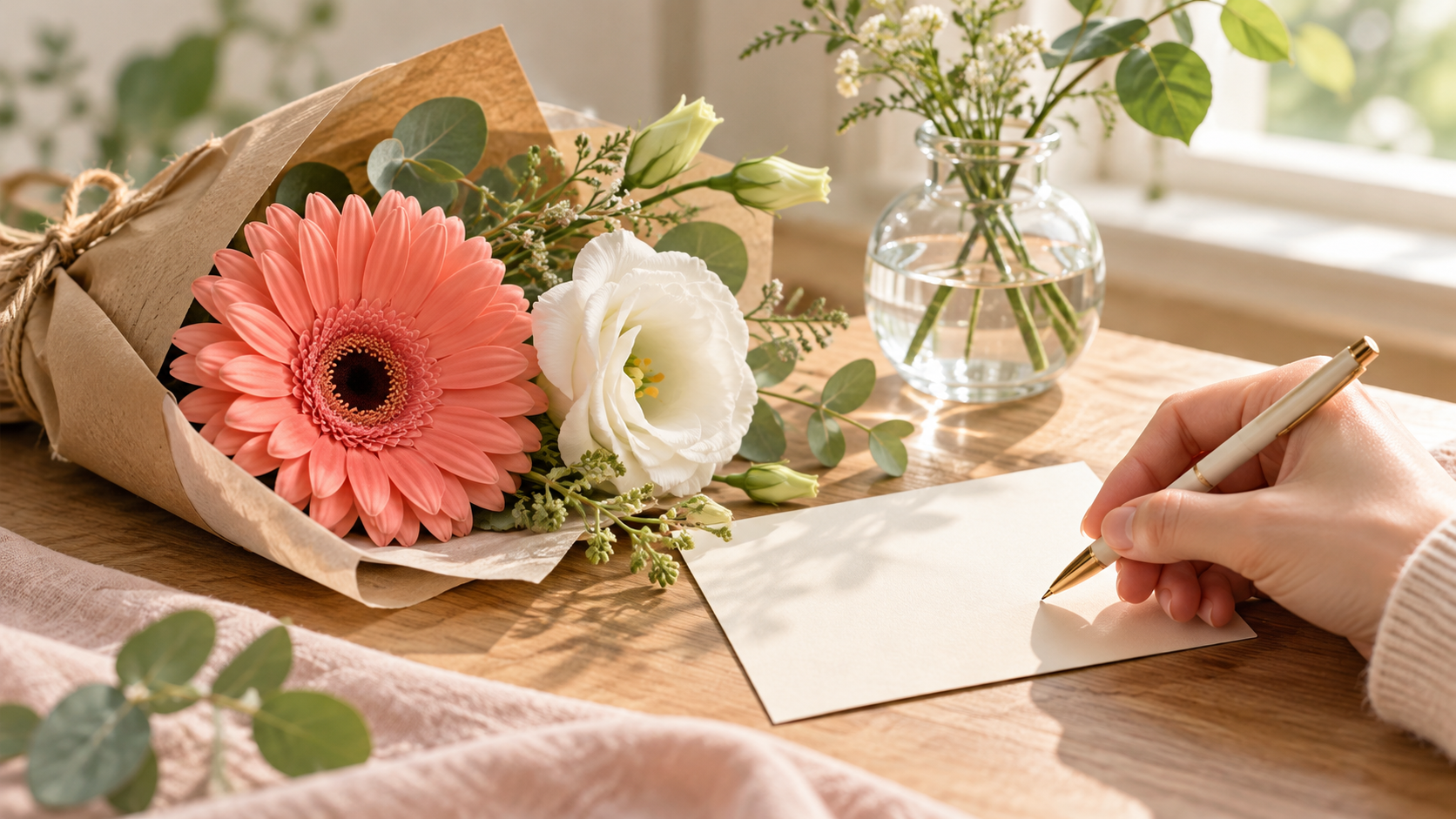
An editorial image illustrating a message card prepared with a flower gift. It does not depict a real person, shop, or product.
Flower meanings can be one source of inspiration, but your gift does not have to fit a single fixed definition. A MAFF regional handout encourages giving flowers more freely between all kinds of people. A card gives you space to explain the gesture in your own words.
Choose one central message
Decide whether the card is mainly a thank-you, encouragement, congratulations, or a simple hello after time apart. One purpose keeps a short card easy to read when the flowers are handed over.
Add one concrete point
Write what the thanks or encouragement is for: “Thank you for helping last week” or “I’m cheering you on in the new job.” If the flowers will be presented in public, avoid private details the recipient may not want others to see.
Treat flower meanings as context, not a verdict
Flower meanings vary among references and cultures. Instead of saying a flower must mean one thing, explain your reason: “I chose this because it’s your favorite color.”
Put care information on the back
If the florist gives a flower name, water-depth note, or instruction to remove transport wrapping, place that practical information on the back. Separating the personal message from care notes makes both easier to read.
Example: “Thank you for always helping me. I thought the bright color would suit you.”
Related: how to give a single flower