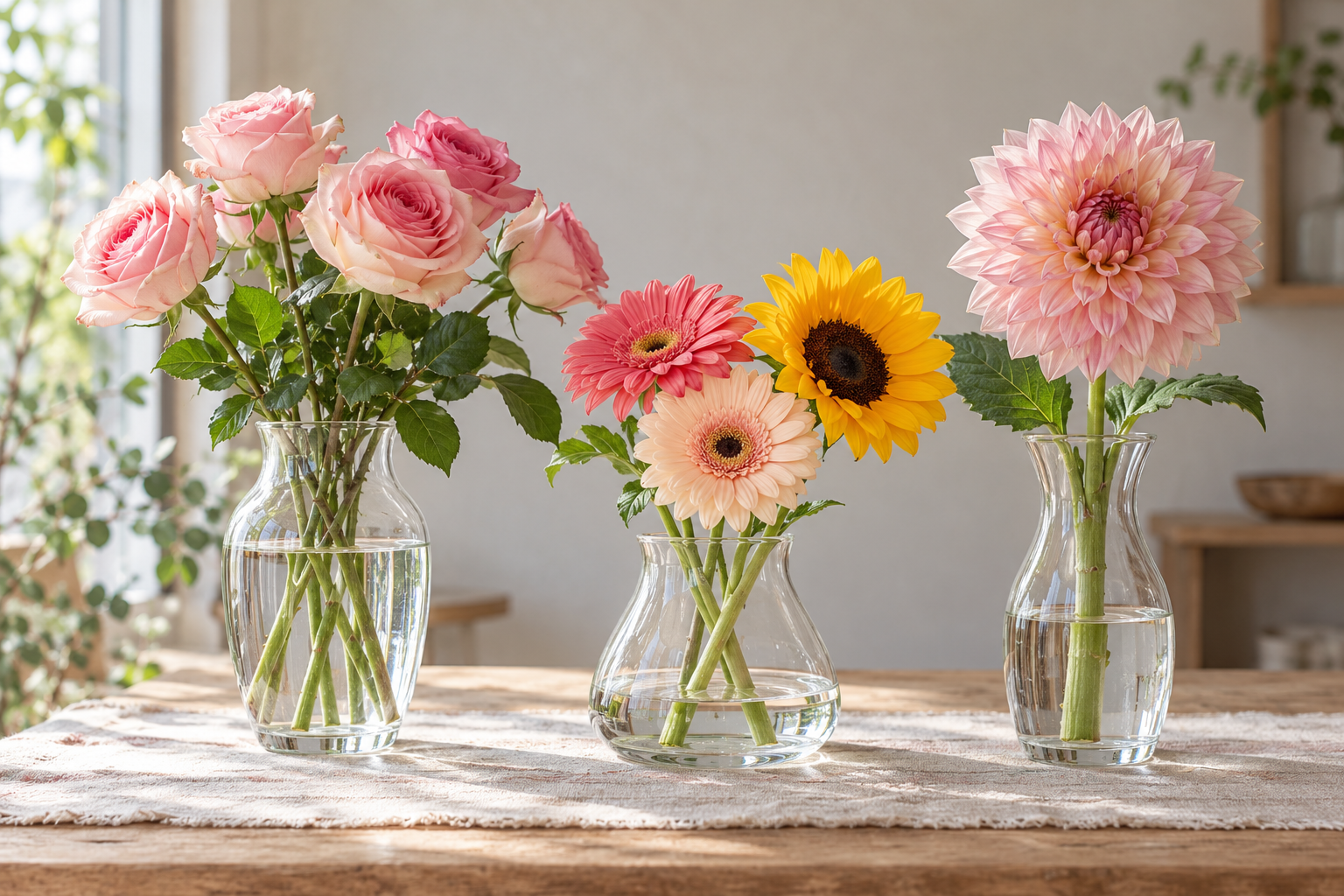
An editorial image comparing water depths for different cut flowers. It does not identify cultivars or a florist.
“Half a vase” is a useful starting point, but it is not a rule for every cut flower. A MAFF regional guide gives shallow water as an example for hairy-stemmed Asteraceae such as gerberas, chrysanthemums, and sunflowers, while hollow-stemmed flowers such as dahlias and delphiniums may use more.
Keep the cut end submerged
Begin with a clean vase and fresh water. Make sure the cut end remains under water. If foliage would be submerged, remove the lower leaves instead of raising the water over them.
Flowers often shown in shallow water
Gerberas, chrysanthemums, and sunflowers are examples for a smaller amount of water. Check daily so evaporation does not expose the stem ends.
Flowers that may use more water
Dahlias and delphiniums have hollow stems and are examples for more water. Cultivar and condition still matter, so follow the florist’s instructions.
Cleanliness comes first
Correct depth cannot compensate for cloudy water or slimy stems. Replace old water, wash the vase, and rinse the submerged stems.
Related: all practical flower guides
Sources: MAFF; MAFF Kanto; MAFF Chugoku-Shikoku